Lead with clarity, even when leadership gets difficult.
Somatic executive coaching for behavioral health, ABA, and purpose-driven leaders who want to reduce stress, resolve recurring people problems, and build a culture where doing the right thing gets easier.
Find out in five minutes where your leadership is strong and where your business needs leadership growth.

Can you relate to these scenarios?
You built something that matters. Somewhere along the way, leading it started to feel heavier than it should.
There's a conversation with a team member you've been meaning to have for three weeks. You know roughly what needs to be said. You also know how it went the last time, so it keeps sliding to next week.
A clinical director came to you with the same staffing problem you solved together four months ago. Different names, same problem. You gave the same advice and you both know you'll be having this conversation again.
You snapped at someone in a meeting, or went flat and checked out, and spent the drive home replaying it. That's not the leader you meant to be, and you know it. That gap might bother you more than the workload does.
You're the person everyone brings problems to, which means you're carrying twelve problems that aren't yours, plus all of yours, plus the business.
None of this means you're bad at leadership. It usually means the opposite. You succeeded your way into a bigger role, and the strategies that got you here were built for a smaller one. Working harder inside old strategies doesn't fix that. It's what's burning you out.
When this work takes hold:
Leaders I work with don't become different people. The values they hold dear come front and center in the moments that count. The hard conversation happens this week instead of next month, and you leave confident in how it went. The recurring problem finally gets addressed at its root instead of managed at its surface. Decisions get made once instead of living rent free in your head all weekend.
That inner shift shows up in real business outcomes:
- Difficult conversations handled early and directly, before small issues become turnover
- Team leaders who own problems instead of escalating them to you
- A culture of accountability that runs on ownership rather than fear or nagging
- Decisions that stick, because they're anchored to your values instead of your stress level
- Time and attention back, because you've stopped carrying what belongs to others
- A team that trusts you more because you're steady, not because you're nice
This is what I mean by learning to meet difficult with ease. Difficult doesn't leave. You stop paying such a high price to face it.
Start with a clear picture
Get your Inspiring Leader Scorecard
Eight questions, about five minutes, and you'll see exactly where your leadership is strong and where your business needs leadership growth. You'll get your results immediately.
Get the ScorecardSchedule a Leadership Strategy Session
This is a working conversation, not a meet and greet. We'll look at what's actually driving your most persistent leadership challenge, what pattern keeps it in place, and what your first move is. Leaders consistently tell me they leave this call seeing their situation more clearly than they have in months, and that clarity is yours to keep whatever you decide to do next.
Schedule a SessionWhy this works when the books and trainings haven't
You've probably read the leadership books. You may already know exactly what you should say in that hard conversation. So why is it still hard?
Because knowing lives in one part of you and reacting lives in another, and under pressure, reacting is faster. When the conversation gets tense, your body responds before your strategy does. Does your jaw tighten? Maybe your throat closes, or maybe your chest tightens, or you feel it in your gut... and then your tone shifts. Finally you're defending or retreating before you've chosen anything. No amount of additional knowledge fixes a pattern that fires before thinking starts.
This is where my two backgrounds meet. As a Board Certified Behavior Analyst with almost two decades leading an organization in this field, I bring evidence-based, OBM-style practices for building systems, accountability, and behavior change that lasts. As a somatic executive coach, I help you work with the reactions and automatic patterns underneath your leadership, so the calm, clear response is actually available when you need it. Somatic coaching is practical, not mystical. It's learning to notice what your body does under pressure and training a different response, the same way you'd train any skill that matters.
Insight plus capacity. That combination is why this work holds when previous efforts haven't.
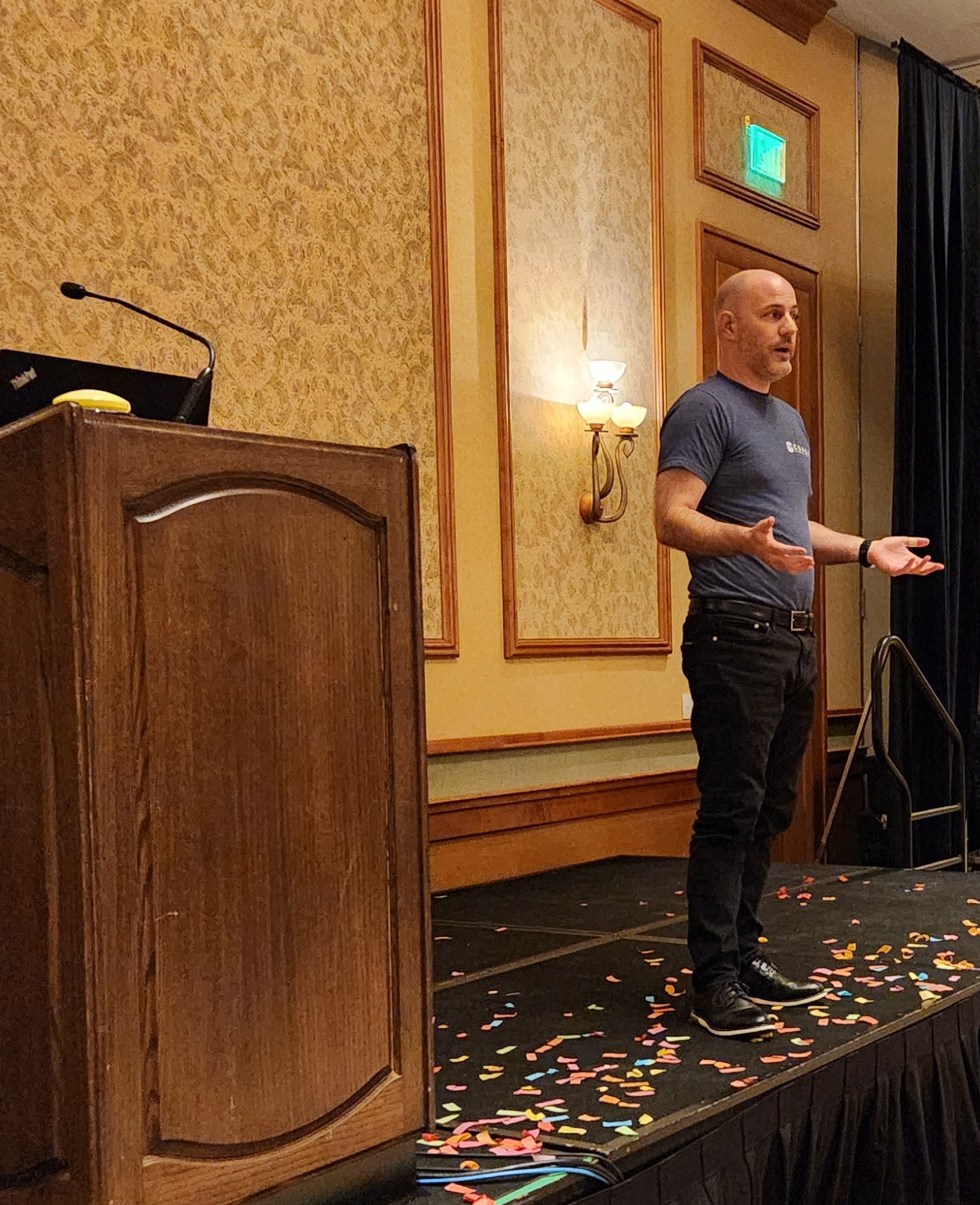
Bryan speaking to behavioral health leaders
The CLIP Leadership Framework
Our work moves through four elements. Each one builds on the last.
Clarity
You get thorough assessments that let you be honest about what matters most, what is actually happening in your organization, and what needs to change. Most leaders are surprised by how much energy they recover from this step alone.
Legacy Mindset
You identify the beliefs and automatic patterns that have been limiting your choices, and you build the influence that comes from leading with unleashing tendencies instead of reactive ones. This is where your leadership starts shaping people beyond the room you're standing in.
Inspired Accountability
You develop accountability that produces ownership, learning, and real action rather than fear or compliance. Your team stops waiting for you to fix everything and solves problems before you even know they exist... because they want to, not because you told them to.
Partners in Growth
You build the relationships and systems that make growth mutual and self-sustaining, with honest communication as the default rather than bolted on.
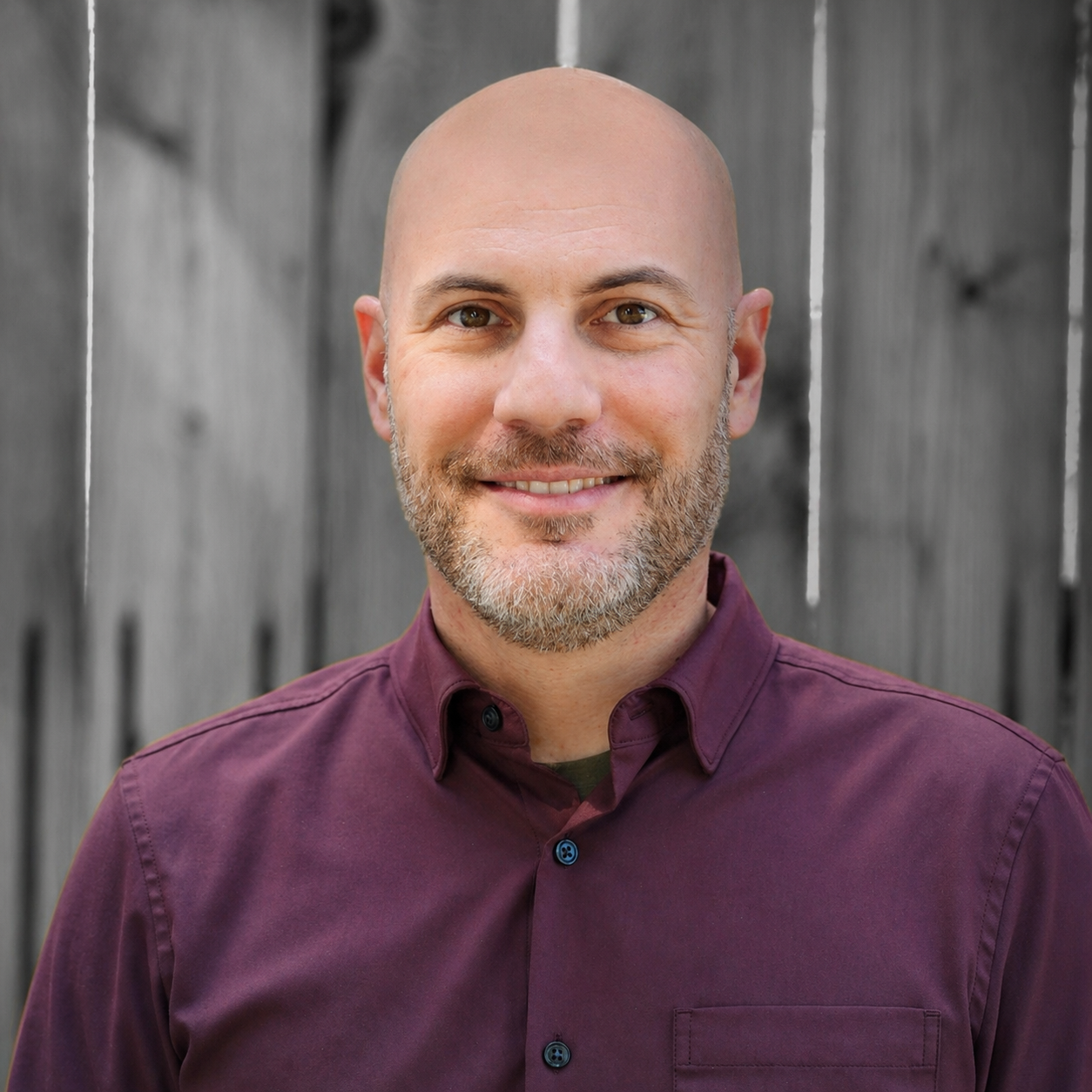
Meet Bryan
Bryan Tanner, MA, BCBA, ACC is a Board Certified Behavior Analyst, an accredited Somatic Executive Coach, and the founder of the CLIP Leadership Framework. He is a Leadership Circle Profile and Leadership Circle System certified coach with more than two decades of leadership experience. He has owned businesses since 2007 and spent almost twenty years leading an organization in the applied behavior analysis field, which means he's had most of the hard conversations he now coaches on, including a few he'd love a rewrite on. He's gone through burnout, and what he discovered was the ways that work to avoid it.
Bryan helps leaders recognize what is happening beneath their automatic reactions, so they can respond with clarity, confidence, and alignment with their values.
From a blurry snapshot to a clear vision
Get your Inspiring Leader Scorecard
Asking quality questions in about five minutes can bring quality outcomes to your leadership. Get a focus point.
Get the ScorecardSchedule a Leadership Strategy Session
30-45 minutes. If you want a clear vision with a motivating plan for your next move, schedule this free Strategy Session now.
Schedule a SessionQuestions leaders actually ask me
I'm a behavior analyst. Is somatic coaching evidence-based?
Fair question, and I'd be disappointed if you didn't ask it. I've been a BCBA since 2009, so I hold this work to the same standard you do. The somatic side draws on well-supported findings about how stress physiology shapes behavior under pressure, and in practice it's straightforwardly behavioral: we identify the private events and physical responses that precede your leadership behavior, and we build new responses through structured practice and repetition. You already know insight alone rarely changes behavior. That principle is the whole reason this approach exists.
Is this therapy?
No. Coaching and therapy are different work with different aims. Therapy typically focuses on healing and processing the past. Our work focuses on your leadership right now: the conversations in front of you, the culture you're building, the patterns that show up when the pressure is on. If something surfaces that belongs in a therapist's office, I'll say so directly and support you in finding that resource. Plenty of my clients do both at once, and the two complement each other well.
What actually happens in a session?
A working conversation with structure behind it. We take a real, current leadership challenge, look at what's driving it, including your own automatic responses to it, and build both the inner capacity and the practical plan to handle it differently. You leave every session with something specific to practice or execute before the next one. No trust falls, and nobody will ask you to journal about your feelings unless you're into that.
What if my problem really is my team, not me?
Sometimes it genuinely is, and my OBM background means we can work on systems, expectations, and accountability structures directly. Here's what I've seen across two decades though: recurring team problems usually have a leadership pattern helping to keep them in place. The team problem and the leader pattern almost always need to be addressed together, and when they are, the fix finally holds.
I don't have time for coaching. How much does this take?
The honest answer is that the leaders who feel this most are the ones who need it soonest. Not having time is usually the presenting symptom: too much on your plate that belongs to other people, decisions that take three passes instead of one, problems that keep coming back because they've never been resolved at the root. The time commitment is one session per week plus practice woven into work you're already doing, and the goal of the work itself is to return hours to your day by resolving what keeps eating them.
How is this different from leadership trainings I've already taken?
Trainings give you knowledge, and knowledge is necessary but not sufficient. If knowing better were enough, the books on your shelf would have solved this already. Coaching is individualized to your actual situation and your actual patterns, includes accountability and repetition, which we both know is where behavior change actually lives, and builds capacity in the moments where trainings fall apart: when you're tired, triggered, or under fire.
How will this coaching help with staff retention and turnover?
Turnover in behavioral health rarely comes down to pay alone. People leave workplaces where problems fester, feedback arrives late or harsh, and accountability feels like blame. Every one of those is a leadership behavior, which means every one of them is changeable. When you address issues early and directly, when your team leaders own problems instead of escalating them, and when your steadiness under pressure becomes something people can count on, staying starts making more sense than leaving. Culture is the retention strategy underneath every other retention strategy.
How will this coaching help with burnout?
Two ways, because burnout runs in two directions. For you personally, we work directly with the stress patterns your body carries, and we address the biggest driver of leader burnout: holding responsibility that belongs to other people. For your team, the culture shifts that come out of this work, clearer expectations, real accountability, conflict handled early, are the same conditions research points to for preventing burnout organization-wide. I've been through burnout myself, so this section of the work is personal. I teach what I needed and eventually found.
What's the structure and the investment?
The core CLIP coaching program runs eight weeks, one on one, moving through Clarity, Legacy Mindset, Inspired Accountability, and Partners in Growth. You can see the full program details at the 8-week program page, and we discuss investment on the Leadership Strategy Session once we've established if you actually need it, because prescribing before assessing is malpractice in your field and mine.
How do I know if I'm ready for this?
Get your scorecard. Five minutes, eight questions, and you'll see where your leadership stands across the four CLIP pillars. If your results surprise you, or confirm something you've suspected for a while, that's your answer.
You don't have to keep leading on empty.
The gap between the leader you are under pressure and the leader you intend to be is not a character flaw. It's a trainable skill, and closing it changes everything else: your team, your culture, and how it feels to be you on a Sunday night.
Find out where you stand.
Get Your Leadership Scorecard